Why Consistency Across Platforms Helps
Using the same or a very similar username across the platforms you actually use makes you easier to find and recognize, whether the context is personal, creative, or professional. It also reduces the mental overhead of remembering which handle belongs to which account.
When a username differs from one app to the next, people who recognize you on one platform often can't confirm that an account on another platform is really yours, especially if someone else has already taken a similar name there. A matching handle works like a simple, built-in form of confirmation: it tells your audience they've found the right account without you having to explain it every time.
Readability and Length
A username that is easy to read, say out loud, and type from memory tends to get shared and remembered more reliably than one relying on unusual spelling or a long string of characters.
Swapping letters for numbers or symbols (a zero for the letter O, a one for a lowercase L) can make a handle feel more distinctive, but it also makes it harder for someone to type correctly from memory or repeat back after hearing it out loud. If you want something that stands out, a short added word or a deliberate underscore tends to hold up better over time than a substitution that only reads clearly in one particular font.

Spelling Choices
If your ideal username is unavailable and you are considering a modified spelling, weigh how much that changes pronunciation or recognizability. A small, intuitive change (adding an underscore or a short word) usually causes less friction than a spelling that looks arbitrary.
A quick way to test a modification before committing to it: say it out loud once, then ask someone else to type or repeat back what they heard. If they land on a different spelling than the one you intended, the change is working against you rather than for you, and it's worth trying a different variation.
Brand or Personal Identity
Decide early whether the username represents you personally, a creative project, or something closer to a brand — that decision affects how much you will want it to stay stable over time versus how comfortable you are changing it later.
| Consideration | Personal / casual use | Professional / public-facing use |
|---|---|---|
| Tie to your real name | Optional — a nickname or interest-based handle works fine | Often helpful, so people can find and confirm it's you |
| Stability over time | Free to change if it stops fitting | Worth keeping stable once it's on a resume, portfolio, or business card |
| Matching across platforms | Nice to have, not essential | Matters more, since people may search for you by name on several platforms |
| Tone | Room for humor or in-jokes | Usually plainer and easier to say to someone you've just met |

Privacy Considerations
A username built directly from your real name or other identifying details is easier for people to connect back to you across contexts. If that is not what you want, choose something that does not directly map to your identifiable information.
What a Consistent Handle Reveals Once It's Linked
The same trait that makes a matching handle easy to recognize also makes it easy to trace. Once someone connects your username on one platform to the same username elsewhere, they can often piece together details you shared separately on each one — a hometown mentioned in one bio, a workplace in another. That's not a problem if you're comfortable being found that way; it's only worth pausing on if you'd rather keep some of your accounts separate from the others.
Separating a Professional Identity From a Personal One
If you want colleagues, clients, or followers to find your public work without also landing on your personal accounts, using two distinct handles usually works better than relying on privacy settings alone. Settings can be reset, changed by a platform update, or simply misconfigured; a separate username doesn't depend on remembering to toggle anything.
What to Leave Out of the Handle Itself
If keeping some distance from your offline identity matters to you, avoid folding a full legal name, a birth year, or a specific location directly into the username. These are exactly the details that make an account easy to match back to a real person, and once a handle has been shared across profiles, bios, and screenshots, removing them later is far harder than leaving them out from the start.
Platform-Neutral Naming
Some platforms have different character limits, allowed symbols, or naming conventions. Before settling on a username, check that your preferred version is actually valid on each platform you plan to use, rather than assuming it will transfer directly.
It's worth doing this check before you invest time promoting a handle anywhere — updating a bio link, a business card, or a printed sticker is more work to redo than adjusting a draft username in a notes app. Consider reserving the handle on any platform you might use eventually, even one you're not active on yet, so it isn't taken by someone else and forcing a mismatch later.
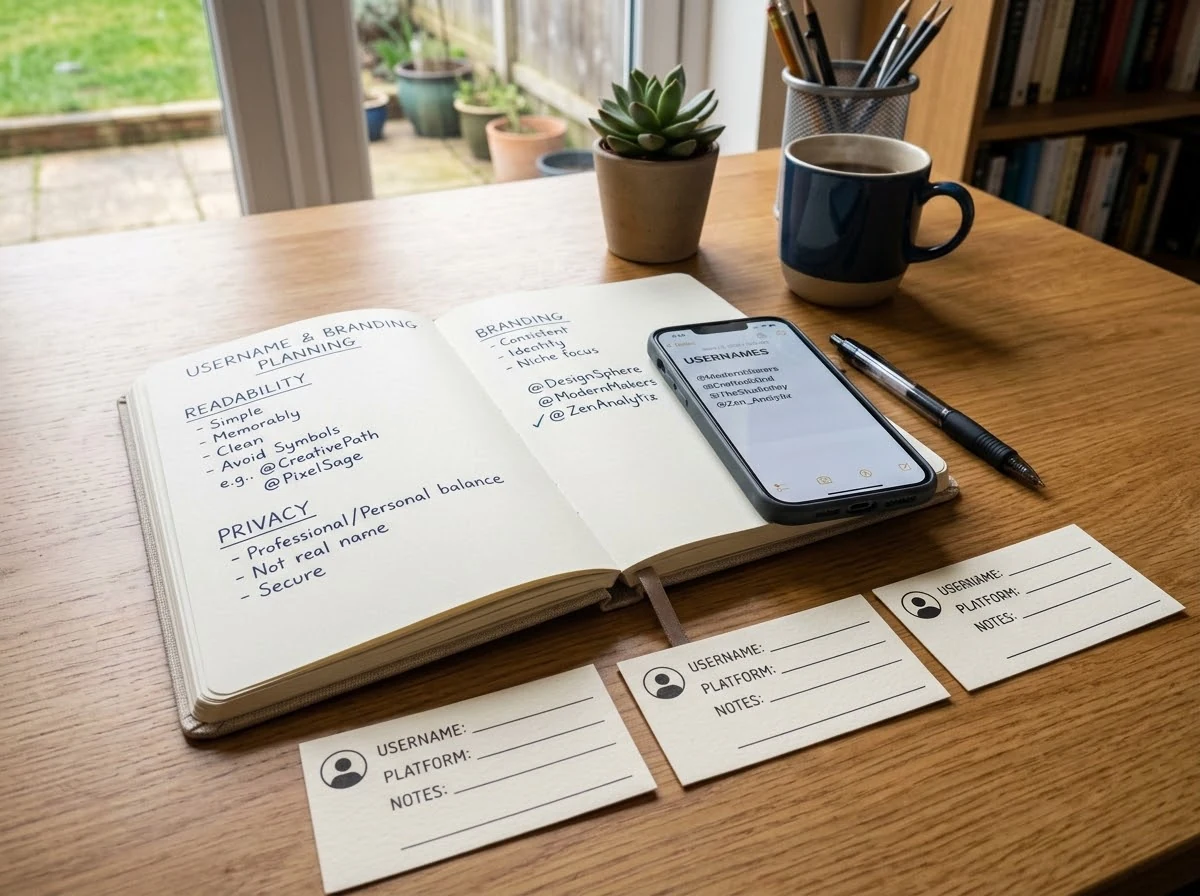
When Your Ideal Username Is Taken
Have a small set of backup variations ready rather than improvising under pressure — a short, deliberate list of alternates (a modifier word, a different but related word, or a light style treatment) tends to produce better results than a rushed decision. NickFinder’s nickname generator can help you explore style variations quickly, or browse name ideas if you'd rather start from a ready-made list.
- Reusing a handle still tied to an old, unwanted account. If a username is still linked in people's minds to an era or community you'd rather leave behind, starting fresh is usually less friction than trying to rehabilitate it.
- Picking something so generic it's rarely available. A common first name or single dictionary word alone often forces random trailing numbers on most platforms, which undercuts the readability and memorability you were trying to protect.
- Not checking it against your own name first. Search the exact spelling you're considering, including close variants, before you're invested in it, so you know what else already shares that name.
- Missing how it reads out of context. A phrase that seems clever together can read as something unintended once it's split across a display name and a separate @handle, or misread quickly. Say it out loud, and look at it exactly as it will display.
Usernames That Also Work as Gaming Names
If you use the same or a similar handle across both social platforms and games, the considerations overlap but aren't identical: gaming names are read briefly in a kill feed or lobby, while social usernames are typed, said aloud, and searched for. If you want one identity to reasonably serve both purposes, see our guide to choosing a gaming name for the platform-compatibility side of things, and our Unicode symbols guide before adding any decorative characters — symbol support differs between social apps and games.
Username Checklist
- Check availability yourself on each platform you plan to use — do not assume
- Decide how closely it should map to your real identity
- Prepare 2–3 backup variations in advance
- Confirm it fits each platform’s character and symbol rules
- Say it out loud — can someone else repeat it back accurately?
Frequently Asked Questions
Is it safe to reuse a username I've had for years, even an old one?
It depends on what that handle is still associated with. If it's linked in people's minds to an account, community, or period you'd rather new contacts not stumble onto, a fresh username usually causes less friction than trying to distance yourself from the old one after the fact.
What if my ideal username is already taken?
Weigh how much a modified spelling changes pronunciation or recognizability. A small, intuitive change tends to work better than an unrelated substitution that makes the name harder to recall or say.
Should a username be tied to my real identity?
That depends on your goals. A username built directly from your real name is easier for people to connect back to you across contexts; if that's not what you want, choosing something that doesn't directly map to identifying details is worth considering.
Explore style variations for your username, or check symbol compatibility first.