Start With Meaning and Origin
Before anything else, most parents want to know what a name actually means and where it comes from. This matters for two practical reasons: it gives the name a story you can tell your son later, and it can reveal cultural or religious associations you may not have expected. For example, on NickFinder's own name pages you can see how a name like Theo carries a French-rooted meaning ("Gift of God"), while Elias traces to a different tradition entirely. Always check a name's origin on more than one page or source before treating a specific meaning as settled fact — name databases, including ours, sometimes disagree with each other, and some entries are more thoroughly verified than others.
Say It Out Loud, Then Say It Fast
A name that reads well on paper doesn't always sound as good spoken. Say the full name — first, middle, and last — out loud several times, including quickly and in a raised voice (the way you might call your son in from a yard). Listen for accidental rhymes with the surname, awkward consonant clusters where the first name ends and the surname begins, and any unintended words or phrases the combination might create.
The First Name + Surname Test
Write the full name exactly as it will appear on a birth certificate, school roster, and eventually a resume, then check it against three specific failure points before treating a name as settled.
Syllable Rhythm
Read the first and last name together and listen for whether the stress pattern of the first name clashes with the surname. Two names that each sound fine alone can still fight each other in rhythm once said back to back — a one-syllable first name against a longer surname (or the reverse) often reads more naturally than two names of similar length.
Letter Collisions
Names ending and surnames starting with the same letter, or with similar sounds, can blur together when read quickly. Say the full name at a normal conversational pace, not slowly and deliberately, since that's how it will actually be used at school pickup or on a phone call.
Unintended Initials
Write out the initials, including any middle name, and check they don't spell something you wouldn't want on a monogram, a locker nameplate, or a name tag. This is an easy check to skip and an easy one to regret.
Think About the Nicknames That Will Happen Anyway
Whatever formal name you choose, friends, siblings, and classmates will likely shorten it. It's worth deciding in advance whether you're comfortable with the likely nickname, or whether you'd prefer a name that resists easy shortening. Some parents pick the nickname first and work backward to a formal name that supports it.
International Pronunciation
If your family has ties to more than one country or language, check how the name is pronounced (and whether it's easy to pronounce) in each relevant language. A name that flows naturally in English may be genuinely difficult for relatives who speak another language, and vice versa.
Family and Cultural Considerations
Many families want a name that honors a relative, a heritage, or a religious tradition, while others prefer to start fresh. Neither approach is more correct than the other — but it's worth having the conversation explicitly with your partner or family early, since assumptions about "whose turn" it is to name a child, or which side of the family gets referenced, can cause friction later if left unspoken.
- Do have the "whose family tradition are we honoring" conversation explicitly, in words, before you're both attached to different names.
- Don't assume your partner shares your assumptions about which side of the family gets referenced first — this is one of the most common sources of late-stage naming conflict.
- Do revisit a name meaning on more than one source; see our guide to verifying baby name meanings for a more detailed process.
Build a Shortlist Method, Not a Single Favorite
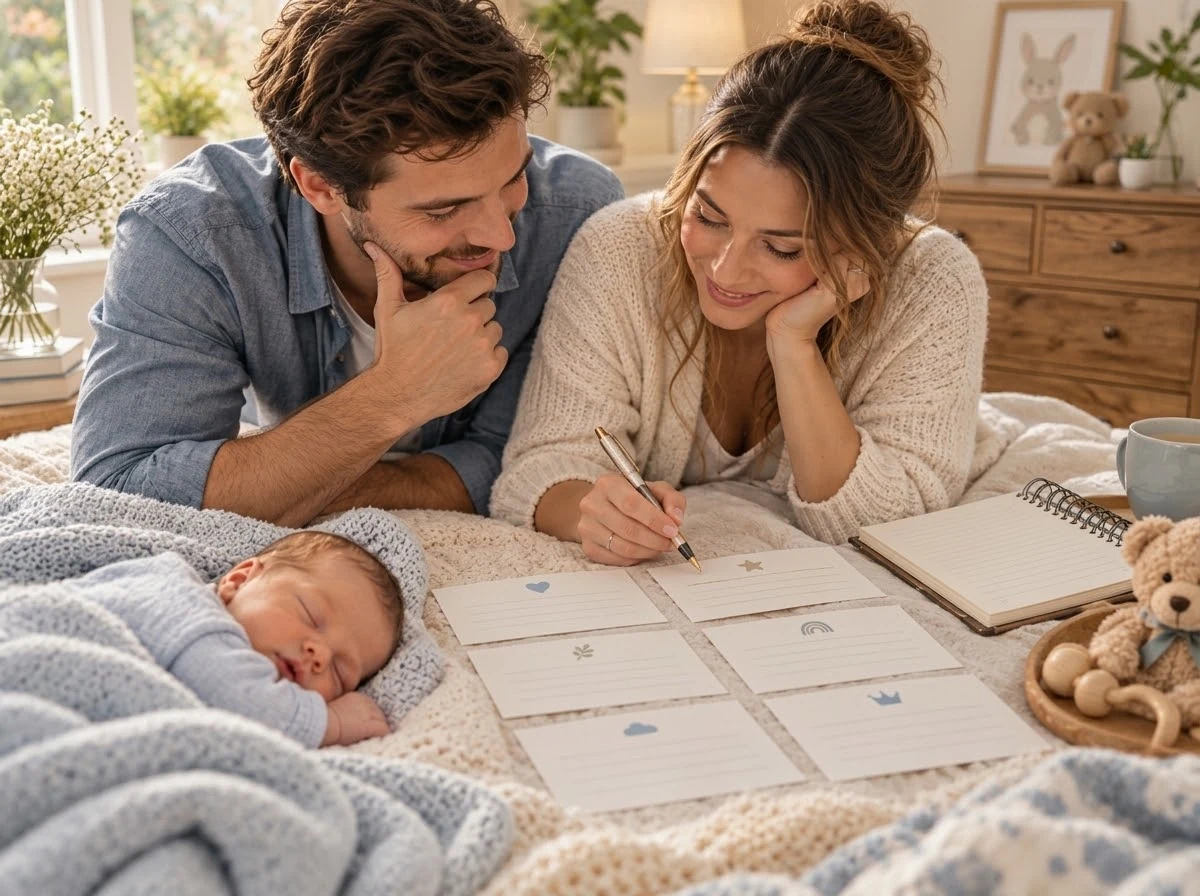
Rather than fixating on one name early, build a shortlist of 5–10 names you both like, then narrow it down over several weeks. Revisit the list after a few days away from it — names that felt exciting on first read sometimes lose their shine, and names you passed over initially can grow on you. You can use NickFinder's name database to browse origins and meanings while building your list.
Common Mistakes to Avoid
Beyond the checks above, a few patterns show up often enough in naming-regret conversations to call out on their own.
- Deciding under social pressure. A due date, a baby shower, or a relative asking "so what's the name?" can push a couple toward locking in a decision before they've actually run it through the tests above. The regret from rushing rarely shows up immediately — it tends to surface months later, once the name is in daily use.
- Skipping the outside gut-check. You don't need anyone's permission, but saying the name out loud to someone outside your household — a friend, a sibling, a coworker — can surface an association you missed: a cousin with the same name, an awkward nickname, or a mispronunciation that's easier to hear about now than after the birth certificate is filed.
- Underestimating spelling friction. A stylized or "unique" spelling of a common name can look appealing on a shortlist, but it often means years of your son correcting substitute teachers, DMV clerks, and coffee-shop baristas. That's not a reason to rule it out — just a trade-off worth choosing on purpose rather than discovering later.
Final Practical Checklist
| Check | Why it matters |
|---|---|
| Say it out loud with the surname | Catches awkward rhythm or sound clashes |
| Write out the initials | Avoids unintended monogram issues |
| Check spelling difficulty | A name people constantly misspell can be a lifelong friction point |
| Consider the likely nickname | Nicknames tend to happen regardless of your preference |
| Ask how it sounds in other relevant languages | Important for multilingual or multicultural families |
| Sit with the shortlist for at least a week | First impressions can be misleading |
There's no universally "correct" way to choose a name — the goal is simply a name your family feels good about for the long run, one that works in the contexts your child will actually live in.
If you're also considering a girl's name at the same time, or want to cross-check meanings more carefully, see choosing a baby girl name and short baby names for related approaches.
Frequently Asked Questions
What's the most practical first test for a name?
Saying it out loud with the surname, then saying it fast, catches awkward rhythm or sound clashes that are easy to miss when a name is only read silently.
Should we worry about nicknames we didn't choose?
It's worth thinking about ahead of time. Nicknames tend to happen regardless of your preference, so considering what a name will likely get shortened to is more useful than assuming it won't happen.
How long should we sit with a shortlist before deciding?
The checklist in this guide suggests at least a week. First impressions can be misleading, and a name that still feels right after time has passed is a stronger signal than initial excitement alone.
Browse real names by origin and meaning, or start building your shortlist directly in NickFinder's database.